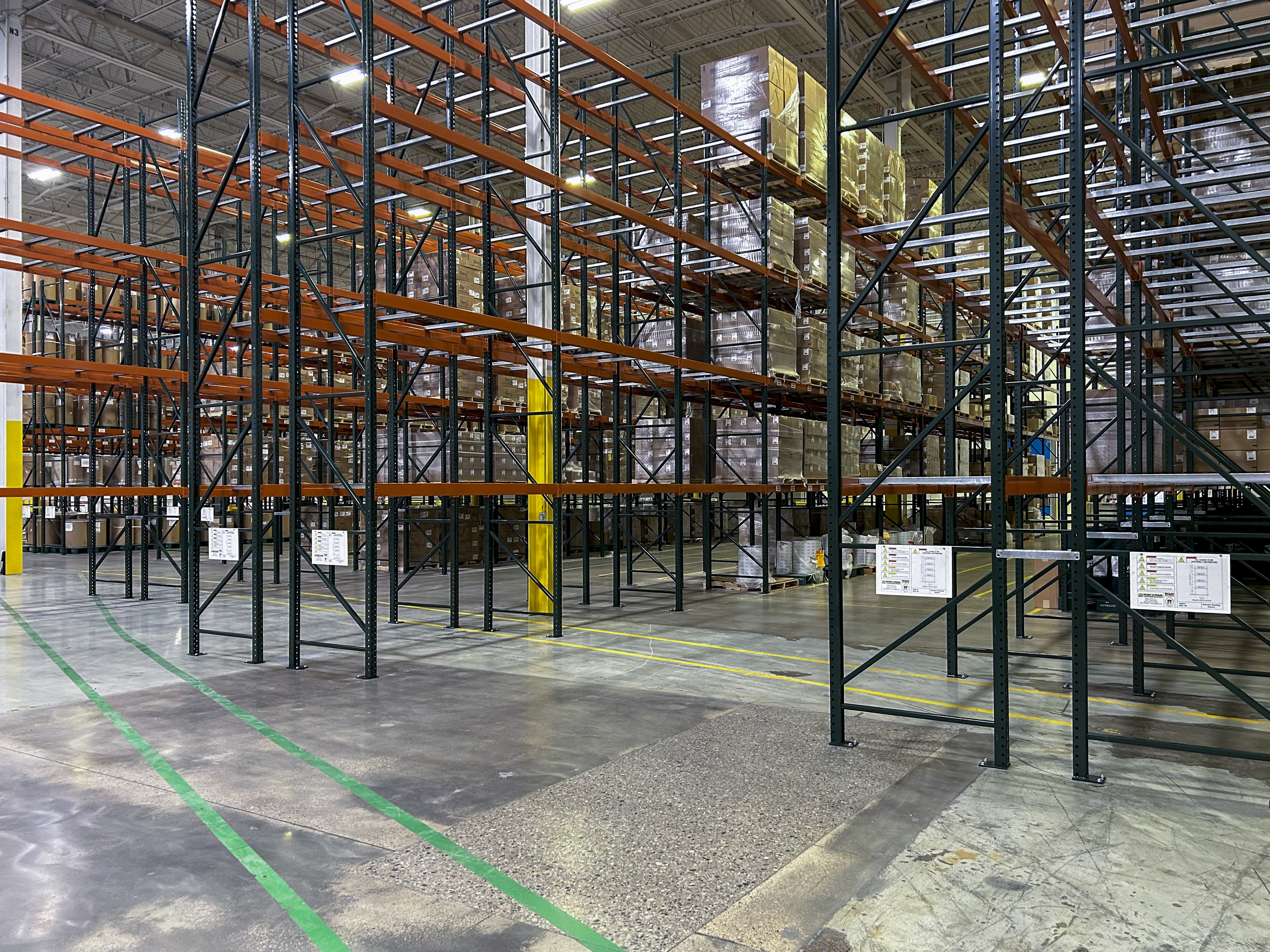
A major distribution center set out to significantly increase storage capacity while staying fully operational. We partnered with the customer to help turn an open floor plan into a highly engineered, vertical storage environment designed to support future growth.
The Problem
As part of a broader operational transformation, the distribution center needed to support higher product volumes due to warehouse consolidation, additional raw materials, and increased complexity across the supply chain. The challenge was clear: expand capacity quickly and safely, without disrupting service levels.
Adding to the complexity, the building footprint could not grow. In fact, recent facility changes reduced available floor space with the addition of a larger cooler. The operation needed a way to do more with less, while also preparing the warehouse for long-term efficiency.
The Solution
The answer came in the form of a comprehensive racking redesign that focused on height, spacing, and precision engineering.
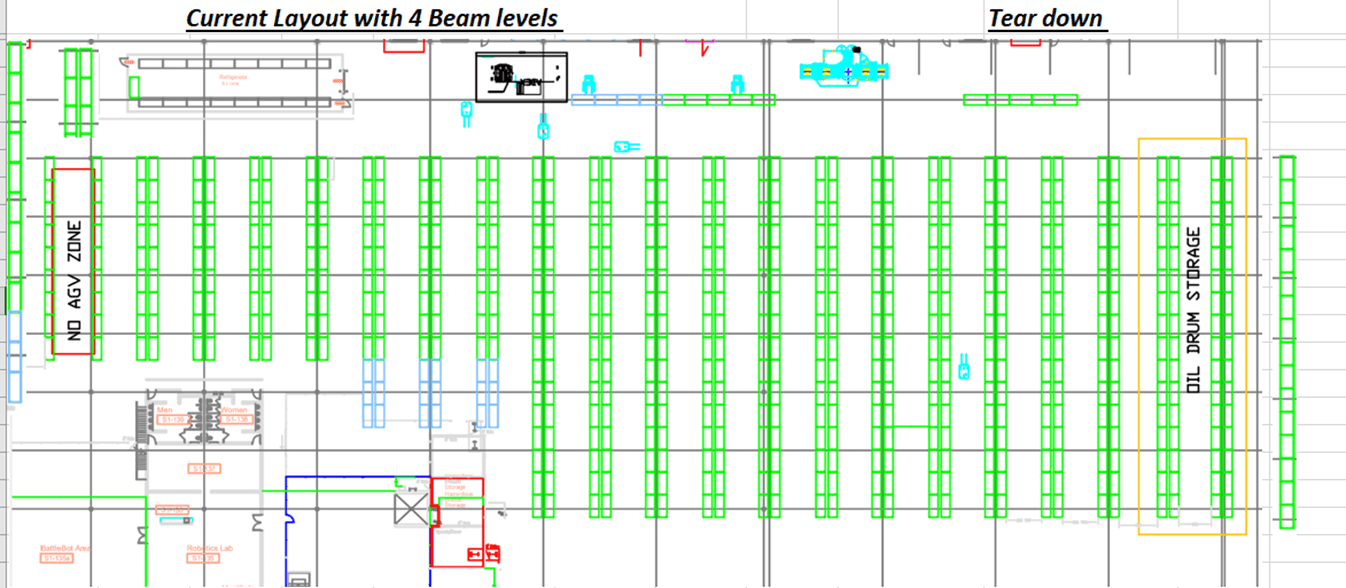
The team reimagined the warehouse layout from the ground up. Key design changes included:
- Narrower aisle widths to maximize usable space
- An additional vertical rack level to take full advantage of ceiling height
- Shorter bay lengths for improved layout efficiency
- Increasing bays per aisle from 16 to 21
This approach allowed the warehouse to expand upward rather than outward, unlocking capacity without increasing the building’s footprint.

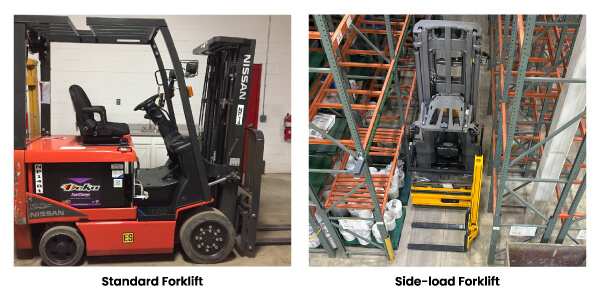
To support the new, narrower aisles, the operation also introduced side-load forklifts designed for high-level, tight-space work. These trucks allow operators to safely travel vertically up to 30 feet with a pallet, enabling efficient picking in a more vertical storage environment.
The Results
With the racking installation progressing, the redesigned warehouse will ultimately support more than 16,000 pallet positions (an estimated 65% increase in rack capacity). This marks one of the most significant capacity gains in the facility’s transformation.
More importantly, the added capacity helps ensure continuity across the supply chain during a major operational transition. The operation is now positioned to maintain service levels, support future growth, and operate more efficiently, all within a smarter, more intentional warehouse design.